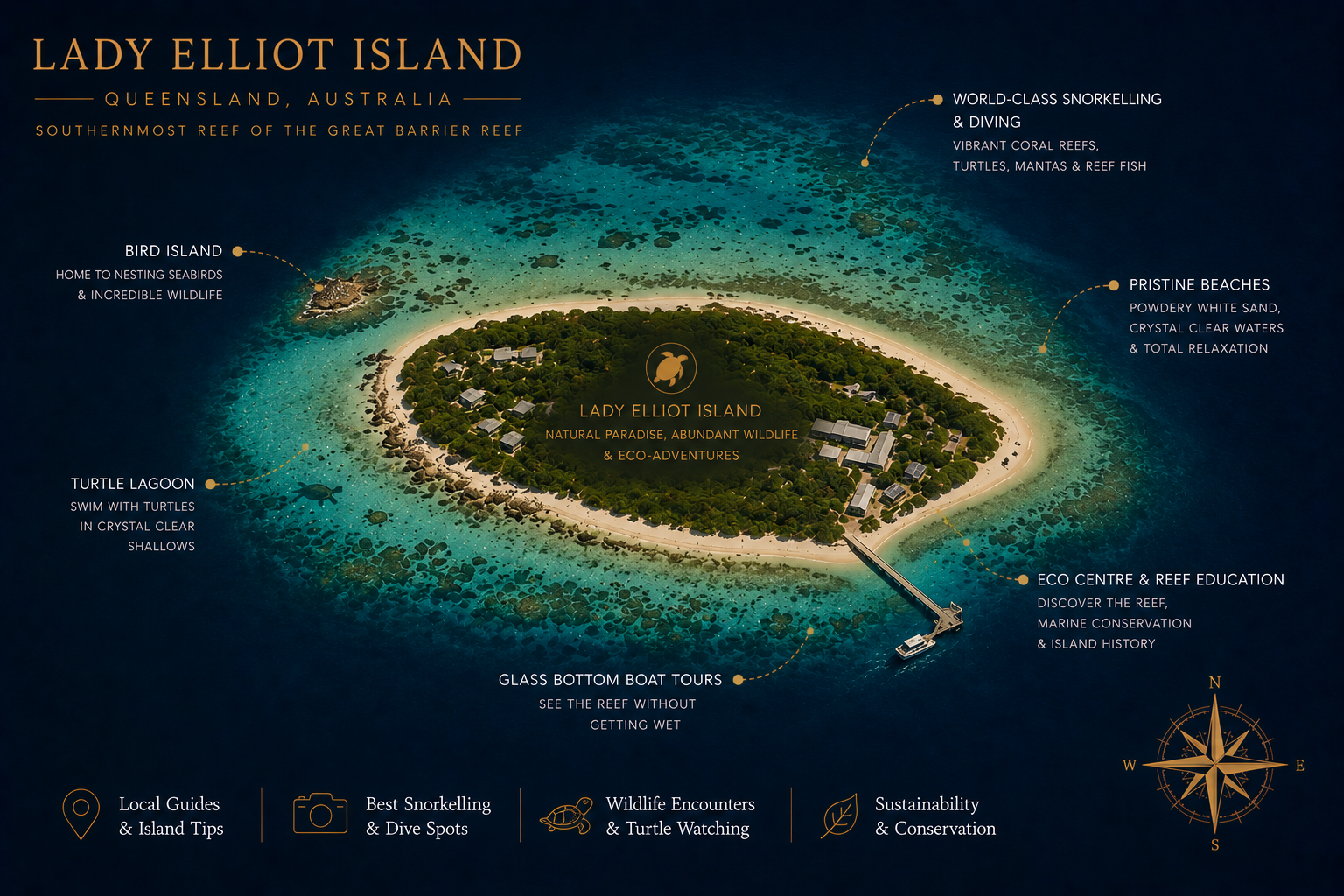
Lady Elliot is the southernmost island of the Great Barrier Reef, a 45-hectare coral cay sitting on a turquoise lagoon, ringed by reef, with a grass airstrip running across the middle of it. It's the place divers and snorkellers go to see manta rays. Not occasionally. Year-round. The waters here host one of the largest known manta populations in eastern Australia.
- State
- Queensland
- State capital
- Brisbane (445 km south)
- Size
- 0.45 km²
- Population
- None permanent (resort + staff ~30)
- Status
- National Park, Marine Park (highest protection zone)
- Best time to visit
- May to Oct (dry, manta peak)
How to get there
By light aircraft only. Seair Pacific operates the route from Hervey Bay (35 minutes), Bundaberg (25 minutes) and the Gold Coast (90 minutes). All flights are scenic, the approach over the reef is one of the better aerial views in Australia.
There's no ferry, no day-cruise drop-off (the resort and Marine Park strictly limit visitor numbers), and the only way to walk on the island is to be a paying guest of the resort or, occasionally, on a permitted day-tour package that includes flights both ways and reef activities.
Aircraft are 8-seat Cessnas. Strict luggage limit (15 kg checked, 5 kg cabin). Pack carefully, and confirm before booking; the limit is enforced.
Approximate costs
| Item | Cost (AUD) |
|---|---|
| Return flight from Hervey Bay (per person) | $435 |
| Return flight from Bundaberg (per person) | $415 |
| Return flight from Gold Coast (per person) | $795 |
| Garden Unit (per night, 2 ppl) | $590 to $850 |
| Reef View Unit (per night, 2 ppl) | $780 to $1,180 |
| Day trip with flights and lunch | $985 |
| Reef cert dive (per dive) | $110 |
| 3-night package (typical, all-inclusive of meals) | $2,100 to $3,800 pp |
What to do
Snorkel the lagoon
The lagoon is shallow, warm, and reef-fringed. Walk in from the beach, mask on, and within metres you're among coral, reef fish, turtles and (frequently) reef sharks. The visibility is among the best on the GBR, 20-30 metres is normal.
Dive with manta rays
This is what most people come for. Lady Elliot's reef hosts a genuine resident population of manta rays, most encounters are at the dive sites Lighthouse Bommie and Encounters, where mantas come to be cleaned by smaller fish. Sightings happen all year, but May to October is peak. Some divers see 5+ mantas on a single dive.
Reef walk at low tide
The lagoon's floor is exposed at the lowest tides. Guided reef walks let you see hundreds of small reef organisms up close, sea cucumbers, anemones, octopuses, baby reef sharks. Reef shoes are essential and provided.
Bird-watching
The island is a major seabird rookery, black noddies, white-capped noddies, crested terns, and several species of booby and shearwater. From October to March, the noddy population can exceed 100,000 birds; the noise is striking. Bring earplugs if you sleep light.
Manta research dive
Project Manta runs research dives where guests assist with manta identification by photographing the unique markings on each ray's underside. You're contributing to a long-term scientific dataset.
When to visit
May to October is the dry season and the manta peak, calm seas, clear water, comfortable temperatures (water around 22-24°C), no stingers. November to April is wetter, hotter, and the seas can get rough, but the water is warmer (26-28°C) and the bird breeding population is at full chaos. Coral spawning happens around the November full moon, divers from around the world come specifically for this annual event.
What to bring
- Reef-safe sunscreen
- Stinger suit (or hire) Nov-April
- Mask, snorkel, fins (free hire on island)
- Underwater camera or GoPro
- Reef shoes (provided for reef walks)
- Hat with chinstrap
- Lightweight long-sleeved shirts
- Sea-sickness tablets for the flight (small plane, choppy in summer)
- Cash for the bar (resort has tab system)
- Reading book, wifi is slow and weather-dependent
A bit of history
Lady Elliot was sighted by Captain Thomas Stewart in 1816 and named after his ship, the Lady Elliot. The cay was extensively mined for guano (seabird droppings, valuable as fertiliser) from the 1860s through the 1880s, with most of the island's vegetation cleared and a third of its surface stripped down to bedrock. By the time mining ceased, Lady Elliot was a stark, almost lifeless rock.
From the 1960s, a long revegetation effort began. Pioneer pilot Don Adams started flying tourists to the island in 1969, which eventually led to the current eco-resort. The island is now a designated Highly Protected Marine Zone, fishing is banned in the surrounding waters, and the reef has rebounded as a result.
The island is operated as an eco-resort with serious sustainability credentials: 80%+ solar power, on-island desalination, full waste-out policy. It's frequently cited in academic literature as a successful model for tourism-conservation partnership on the GBR.
Where this is on the map
Southernmost coral cay of the GBR, off the southern Queensland coast.
Other islands you might pair with this
The natural sister island is Heron Island just to the north, also a coral cay on the southern reef. K'gari (Fraser Island) is a useful contrast, same coastline, completely different geology. Hamilton Island for the larger-resort version of the GBR experience.