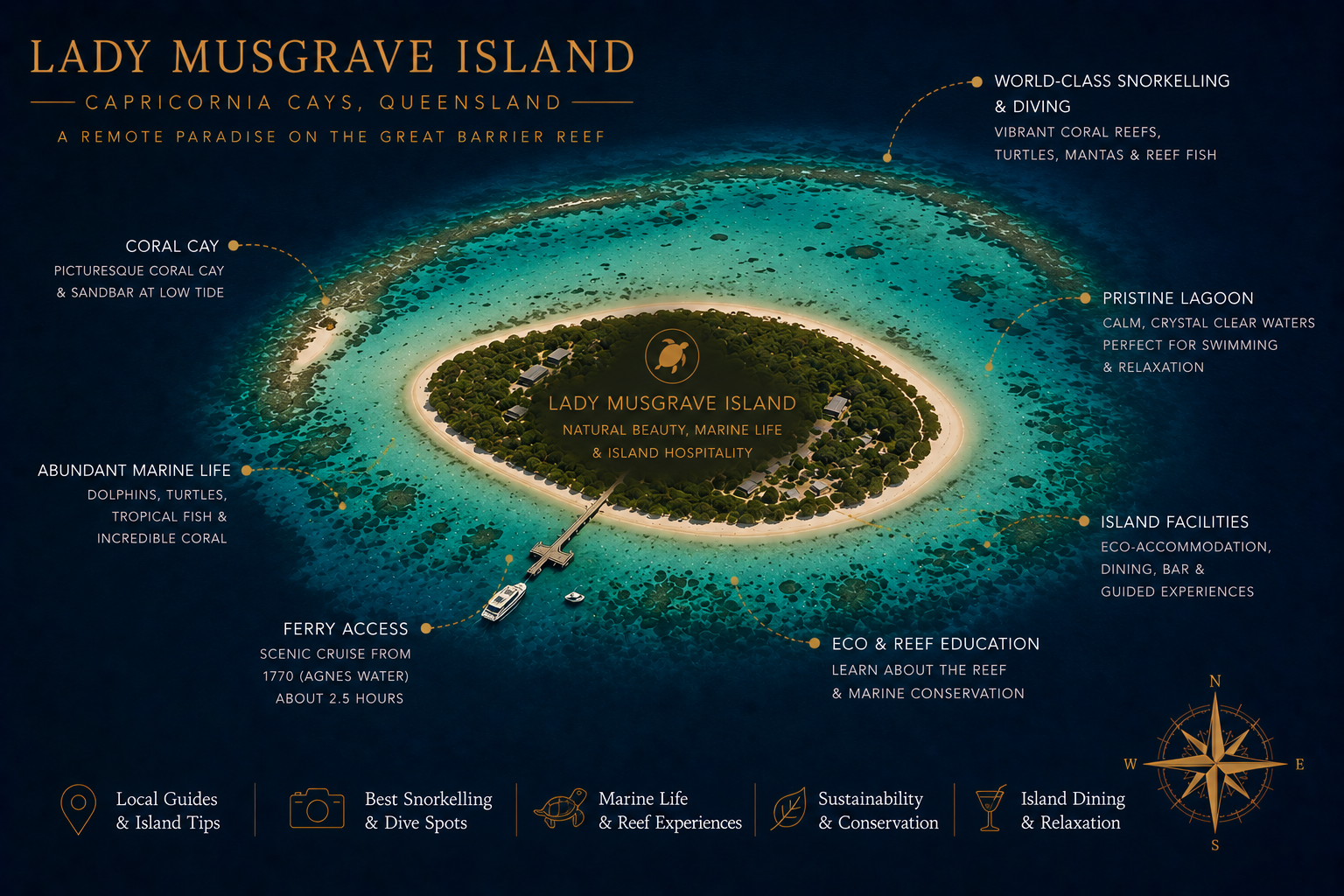
A coral cay with a true coral-ringed lagoon, one of the very few places on the Great Barrier Reef where a yacht can sail straight in through a natural channel and anchor inside the reef itself. The island is uninhabited, the snorkelling is straight off the boat, and the day-cruise market hasn't fully discovered it yet. The best part might be that you'll often have it to yourself for an hour at a time.
- State
- Queensland
- State capital
- Brisbane (480 km south)
- Size
- 0.18 km²
- Population
- None permanent
- Status
- National Park, Marine Park
- Best time to visit
- April to Oct
How to get there
Two day-cruise options. Lady Musgrave Experience sails from Bundaberg, about two hours each way to a permanent eco-pontoon on the reef edge, with the cay a short tender-boat ride away. 1770 Reef Cruises runs from the Town of 1770 (yes, that's the actual town's name), slightly shorter crossing, similar setup.
If you'd rather camp on the cay overnight, you need a Queensland Parks permit and to arrange your own boat transfer. The cay's camping area is small (40 people maximum), with composting toilets and no other infrastructure.
There is no resort, no airstrip, no shop, no scheduled accommodation. Day-trip or camp.
Approximate costs
| Item | Cost (AUD) |
|---|---|
| Day cruise from Bundaberg (adult, includes lunch) | $245 |
| Day cruise from Town of 1770 (adult) | $240 |
| Optional snorkel safari add-on | $45 |
| Optional intro scuba dive | $110 |
| Camping permit (per night, family) | $30 |
| Private boat transfer (camp, return) | ~$300 to $500 pp |
What to do
Snorkel the lagoon
The day cruises moor at the pontoon on the reef edge. From there you snorkel directly over coral gardens 4-8 metres below, visibility is typically 15-25 metres. Manta rays, reef sharks, turtles and (in season) whales pass through. The lagoon is one of the few spots on the GBR where you can really see how a coral ring forms around a sandy cay.
Glass-bottom boat / semi-submersible
Both Bundaberg and 1770 cruises include a glass-bottom boat or semi-submersible tour as part of the package. Useful for kids and non-swimmers who still want a reef encounter.
Walk the cay
The 40-minute loop around the cay reveals nesting seabirds (depending on the season, black noddies, white-capped noddies and bridled terns colonise much of the island), turtle nests in summer, and the strange landscape where Pisonia trees have created a closed-canopy "rainforest" growing on dead coral.
Camping overnight
The 40-person nightly cap means the cay is quiet after the day boats leave at 3pm. Bring everything: tent, water, food, all rubbish out. Reef-walk at low tide, snorkel without crowds at sunset, listen to the noddy chorus at dusk.
When to visit
April to October is the dry season, calmer seas, better snorkel visibility. Whales pass through July to October. Coral spawning happens around the November full moon and is a once-a-year sight if you can time it. Summer (December to February) is hot, humid, with rougher seas; cyclones occasionally cancel cruises. The cay has nesting noddies and shearwaters from October to March, bird-rich but very loud.
What to bring
- Reef-safe sunscreen
- Stinger suit or rashie
- Snorkel kit (provided on tours)
- Reef shoes
- Hat with chinstrap
- Sea-sickness tablets
- Underwater camera
- Long sleeves for sun protection
- If camping: everything (no facilities)
- Cash for tour add-ons
A bit of history
The cay was named in 1843 by Captain Blackwood after Lady Musgrave, wife of the Queensland governor at the time. Like most of the southern reef cays, it was extensively guano-mined in the late 19th century, the Pisonia "rainforest" you walk through today was effectively absent for decades after the surface was stripped.
The cay was declared a National Park in 1939, one of the earliest formal protections of any GBR site. The eco-pontoons and managed cruise model emerged in the 1980s; the strict 40-person camping cap has been in place since the 1990s.
Lady Musgrave is named for Jeanie Lucinda Musgrave, an active and publicly engaged consort to a colonial governor, but the broader island story sits within the marine country of the Bailai, Gooreng Gooreng, Gurang and Taribelang Bunda peoples of the Capricorn Coast.
Where this is on the map
About 100 km offshore from Bundaberg, southern Great Barrier Reef.
Other islands you might pair with this
Sister cays: Lady Elliot Island (further south, plane access only) and Heron Island (similar size, has a resort). Together they form the southern reef cay trio.