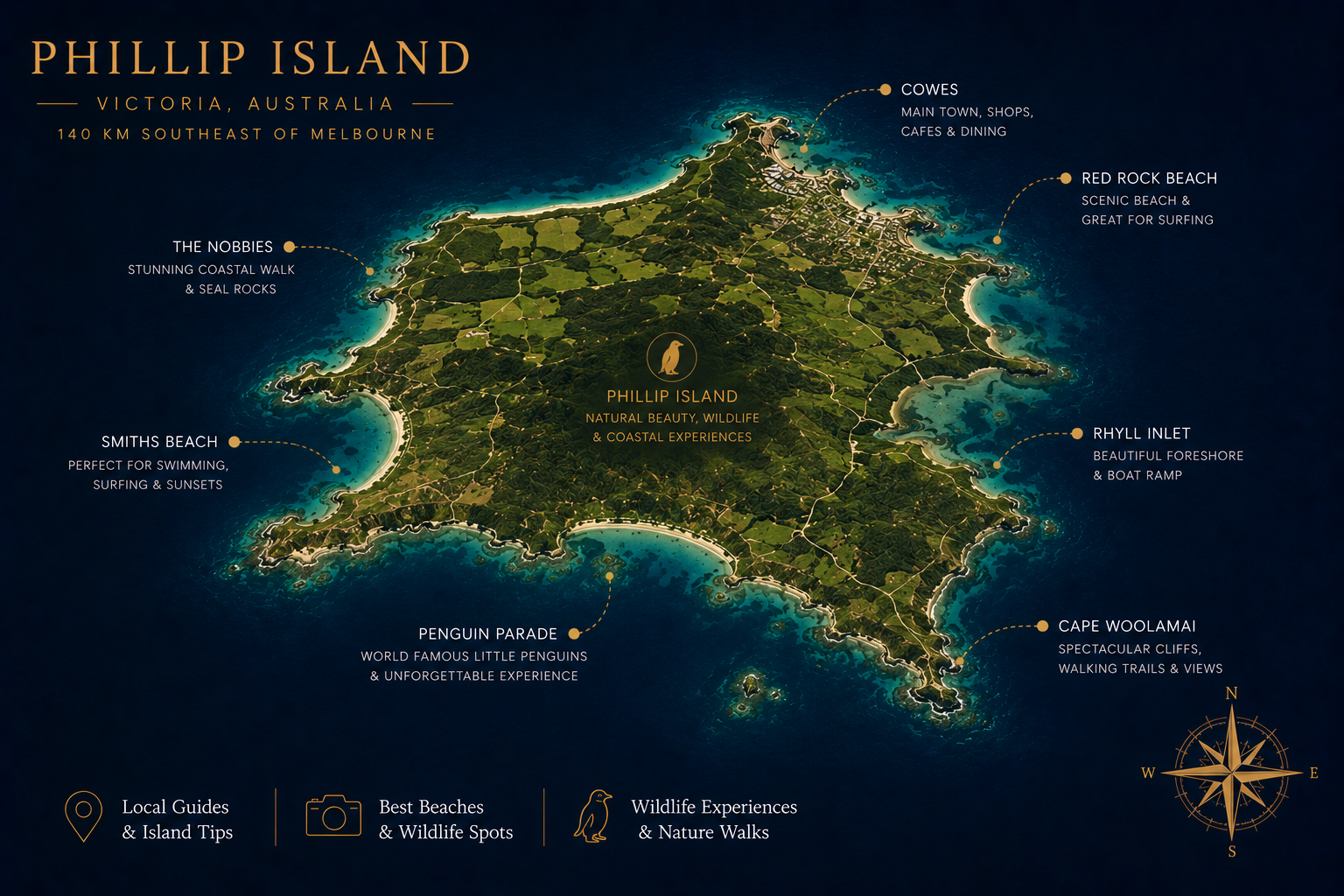
Phillip Island is the easy one. You drive from Melbourne, cross a bridge at San Remo, and you're there in under two hours, no ferry, no booking, no fuss. Most people come for one thing: 1,400 little penguins waddling out of the surf at sunset. There's also surf, motorsport, a working farming community, and a koala centre that actually works.
- State
- Victoria
- State capital
- Melbourne (140 km northwest)
- Traditional Owners
- Bunurong people
- Size
- 100 km², 26 km long
- Population
- ~13,000 (rises to 70,000 in summer)
- Best time to visit
- Year-round (penguins are here daily)
How to get there
Drive. The M1 motorway south-east from Melbourne to Lang Lang, then the South Gippsland Highway to San Remo, then the bridge to Newhaven. About 90 minutes without traffic, two hours on a Friday afternoon.
If you don't drive, V/Line runs a coach service from Southern Cross Station to Cowes, the main town on the island, it takes about 3 hours and isn't ideal for the Penguin Parade because the timetable doesn't return that late. Most non-drivers go via day tour: Melbourne is full of operators offering full-day Phillip Island tours combining the koala centre, Brighton Beach (or another mainland stop) and the Penguin Parade.
There's no airport. The closest airport is Melbourne (Tullamarine).
Approximate costs
| Item | Cost (AUD) |
|---|---|
| Penguin Parade General Viewing (adult) | $31 |
| Penguin Parade Penguins Plus seating | $60 |
| Penguin Parade Underground Viewing | $92 |
| Koala Conservation Reserve (adult) | $15 |
| Phillip Island 4 Parks Pass (adult) | $58 |
| Day tour from Melbourne (adult) | $140 to $220 |
| Self-contained accommodation (per night) | $160 to $320 |
| Australian MotoGP race weekend ticket | $290 to $550 |
Penguin Parade tickets must be booked in advance, they sell out daily during summer and school holidays.
What to do
The Penguin Parade
This is what people come for. Every evening at sunset, little penguins (the smallest penguin species, also called fairy penguins) come ashore at Summerland Beach in groups, called "rafts," and waddle up the dunes to their burrows. The show happens 365 nights a year, all weather. Phillip Island Nature Parks runs the viewing, a purpose-built complex with elevated viewing stands and an underground glass-walled gallery at sand level. No photography is permitted; the flash damages penguin eyes. Get there 45 minutes before sunset.
Koala Conservation Reserve
An elevated boardwalk through eucalyptus forest where koalas live more or less at eye level. Genuine wild population, monitored. Better than most zoo experiences, the koalas have space and behave naturally.
Cape Woolamai
The southeastern tip of the island, with cliffs, surf beach, and a 7 km coastal walking circuit (the Cape Woolamai Walk), about 2.5 hours, surprisingly few people. Surf at Woolamai Beach is among the best on the island.
The Nobbies & Seal Rocks
At the western tip, a boardwalk takes you out to a viewpoint over Seal Rocks, Australia's largest fur seal colony, around 16,000 animals. You can also take a boat trip out to the rocks themselves.
Australian MotoGP & Superbikes
The island hosts the Australian MotoGP every October at the Phillip Island Grand Prix Circuit. The Superbike World Championship rolls through in February. Both fill the island; book accommodation 12 months ahead. The track is open to public visits and you can do a guided lap drive on quieter days.
When to visit
The Penguin Parade runs every night, year-round. Summer (December to February) is busiest, book everything ahead. The island gets very full at weekends and during Victorian school holidays. Spring and autumn give you cooler weather but the penguins still parade. Winter is quietest and oddly atmospheric, fewer people, dramatic surf, but layer up. The MotoGP weekend in late October and the Superbike weekend in late February are the two times accommodation prices double or triple.
What to bring
- Warm layers for the Parade (it's cold after dark, year-round)
- Beanie / scarf in winter
- Waterproof / windproof jacket
- Walking shoes
- Binoculars for koalas and seals
- Camera (no flash for penguins)
- Cushion or blanket for stadium seating
- Snacks, limited food at Parade after 6pm
- Cash optional
- Earplugs if you're staying near the racetrack on race weekends
A bit of history
The Bunurong people of the Kulin nation are the traditional owners of Phillip Island and the surrounding Western Port coast. Middens and stone tool sites along the southern beaches show occupation extending back thousands of years.
European contact began with George Bass in 1798, Western Port is named after him calling it the "western port" relative to Sydney. The island was named after Arthur Phillip, the first Governor of New South Wales. Sealers and whalers worked the coast aggressively in the early 19th century, decimating the seal colonies that have only recovered in modern times.
The Penguin Parade as a tourist attraction began in the 1920s, when locals would walk down to Summerland Beach with kerosene lamps to watch the penguins come in. By the 1980s, urban development around the rookery had become a serious threat. From 1985, the Victorian government began buying back houses on Summerland Estate and removing them, by 2010, all 774 houses on the rookery had been demolished, in one of the most ambitious wildlife reclamation projects ever attempted in Australia. The penguin population has rebounded as a result.
Where this is on the map
Western Port Bay, southeast of Melbourne, connected by bridge.
Other islands you might pair with this
If Phillip Island piques your interest, the natural next step is Bruny Island in Tasmania, bigger, wilder, similar drive-on access. Kangaroo Island in SA is the bigger and more remote sibling.